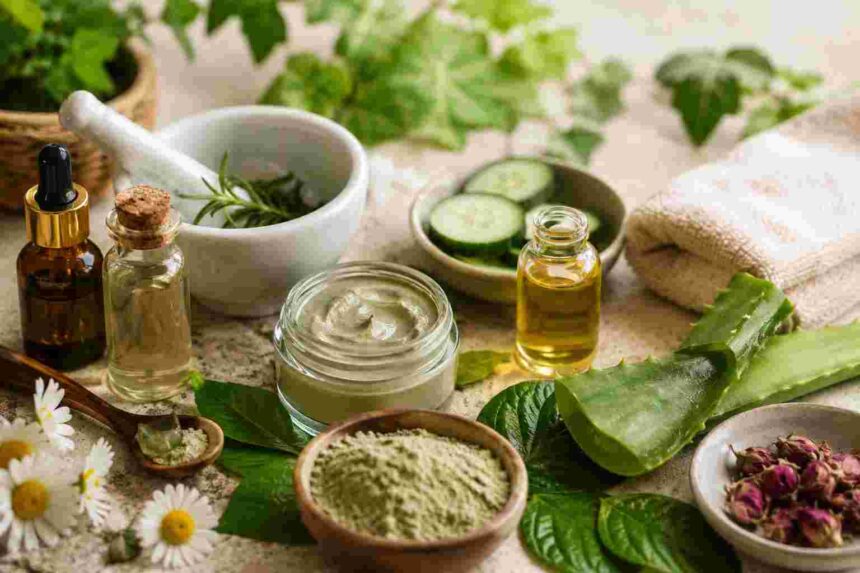
Well Health Organic beauty tips refer to a set of natural, Ayurveda-informed skincare and haircare practices that rely on clean, minimally processed ingredients instead of synthetic chemicals. This guide covers daily routines, key ingredients, DIY masks, haircare, nutrition, and common concerns like acne and hair fall. What sets this approach apart is consistency over complexity — most results come from five or six simple habits repeated correctly, not a shelf full of products.
- What Are Well Health Organic Beauty Tips?
- Why Choose Organic and Natural Beauty Care
- Daily Skincare Routine: Morning and Evening Steps
- Organic Ingredients Worth Knowing
- DIY Organic Face Masks for Different Skin Types
- Natural Hair Care Tips and Weekly Routine
- Nutrition for Skin and Hair: What to Eat for a Natural Glow
- Lifestyle Habits That Affect Your Skin and Hair
- Solutions for Common Skin and Hair Concerns
- Budget-Friendly and Beginner Beauty Tips
- Common Beauty Mistakes to Avoid
- Conclusion
- FAQs
What Are Well Health Organic Beauty Tips?
WellHealthOrganic-style beauty tips draw from Ayurvedic principles and organic living, favoring ingredients you can recognize and often already have at home. The idea isn’t to reject modern skincare entirely, but to reduce dependence on synthetic fillers, fragrances, and preservatives that can irritate sensitive skin over time.
This method treats skin and hair as connected to overall health, not separate from it. Diet, sleep, and stress all factor into how skin looks. A chemical-free approach also tends to be gentler for South Asian skin types, which are often more prone to pigmentation and sensitivity.
Understanding why this matters requires looking at what conventional products often leave out.
Why Choose Organic and Natural Beauty Care
Many mainstream products contain synthetic compounds linked to skin barrier disruption and, in some cases, hormone interference. The Environmental Working Group has flagged over 168 chemicals commonly found in personal care items for further safety review. That’s not a reason to panic, but it is a reason to read labels.
The organic beauty market is growing fast for this reason — global estimates put it near $25.1 billion by 2030, according to Grand View Research. Demand is shifting toward transparency, not just trends.
| Factor | Synthetic Products | Organic/Natural Products |
| Ingredient sourcing | Lab-synthesized compounds | Plant/mineral-based |
| Skin barrier impact | Can strip natural oils | Generally gentler |
| Absorption risk | Higher for some additives | Lower, fewer additives |
| Longevity of results | Fast but often temporary | Slower, more cumulative |
The real difference shows up in daily routine, which is where most people go wrong.
Daily Skincare Routine: Morning and Evening Steps
A two-minute routine, done daily, outperforms a ten-step routine done inconsistently.
Morning Routine
Cleanse with a mild, sulfate-free cleanser. Follow with a vitamin C serum to brighten and protect against environmental damage. Apply moisturizer, then finish with SPF 30 — skipped by most people, yet it’s the single step that prevents the most long-term damage.
Evening Routine
Double cleanse to remove sunscreen and pollution buildup. Use retinol alternatives like bakuchiol if your skin reacts to stronger actives. Finish with a night repair cream, and consider a silk pillowcase to reduce friction on skin overnight.
| Time | Step | Purpose |
| AM | Cleanser | Removes overnight buildup |
| AM | Vitamin C serum | Antioxidant protection |
| AM | Moisturizer + SPF 30 | Hydration + sun defense |
| PM | Double cleanse | Removes SPF/pollution |
| PM | Bakuchiol or night cream | Repair and renewal |
Once the routine is set, the ingredients you choose matter just as much as the steps.
Organic Ingredients Worth Knowing
A handful of ingredients do most of the work. Aloe vera calms irritation and hydrates without heaviness. Turmeric has mild antibacterial properties, useful for occasional breakouts. Honey acts as a natural humectant, and green tea extract offers antioxidant support similar to vitamin C.
Niacinamide helps even skin tone and control oil, while rosehip oil supports scar fading. In practice, patch-testing turmeric for 24 hours before full use avoids the temporary yellow tint some people notice on lighter skin.
| Ingredient | Best For | How to Use |
| Aloe vera | Irritation, sunburn | Apply gel directly |
| Turmeric | Dullness, minor blemishes | Mix with yogurt, patch-test first |
| Honey | Dryness | Use as a mask base |
| Green tea extract | Antioxidant support | Look for it in serums |
| Niacinamide | Oil control, tone | Serum, AM or PM |
These same ingredients form the base of most effective DIY masks.
DIY Organic Face Masks for Different Skin Types
Dry Skin
Mix honey and finely ground oatmeal. Leave on for 15 minutes for immediate softness.
Oily or Uneven Tone
Combine turmeric with plain yogurt. The lactic acid in yogurt gently exfoliates while turmeric calms inflammation.
Mature Skin
Mash ripe avocado and apply directly. Its natural fats support skin elasticity.
| Skin Type | Mask | Key Benefit |
| Dry | Honey + oatmeal | Softens, hydrates |
| Oily/uneven | Turmeric + yogurt | Exfoliates, calms |
| Mature | Avocado | Elasticity support |
Hair benefits from a similar weekly rhythm.
Natural Hair Care Tips and Weekly Routine
A weekly oil massage with coconut oil, almond oil, or amla oil strengthens roots and reduces breakage. Massage into the scalp 30 minutes before washing with a sulphate-free shampoo.
Apple cider vinegar, diluted with water, works as a clarifying rinse that removes product buildup without stripping natural oils. Most people notice less frizz within a few weeks of consistent use, not overnight.
What you eat affects hair just as much as what you apply.
Nutrition for Skin and Hair: What to Eat for a Natural Glow
Skin and hair reflect internal health. Vitamin C supports collagen production, vitamin E protects cell membranes, and omega-3 fatty acids reduce inflammation that can worsen acne and dullness. Zinc and biotin both support hair strength.
A simple day might look like citrus fruit at breakfast, a lentil or fish-based lunch for omega-3s, and nuts or seeds as a snack for zinc and vitamin E.
| Nutrient | Food Source | Skin/Hair Benefit |
| Vitamin C | Citrus, amla | Collagen support |
| Vitamin E | Almonds, sunflower seeds | Cell protection |
| Omega-3 | Fish, flaxseed | Reduces inflammation |
| Zinc | Pumpkin seeds | Hair strength |
| Biotin | Eggs, nuts | Hair growth support |
Diet alone won’t offset poor sleep or chronic stress, though.
Lifestyle Habits That Affect Your Skin and Hair
Sleep and Recovery
Skin repairs itself most actively during deep sleep. Consistently short sleep slows collagen renewal.
Stress Management
Elevated cortisol from chronic stress can break down collagen and trigger breakouts or shedding.
Exercise and Circulation
Regular movement improves blood flow, which delivers oxygen and nutrients to skin cells more efficiently.
These habits set the baseline, but specific concerns often need targeted solutions.
Solutions for Common Skin and Hair Concerns
Acne
Salicylic acid and niacinamide both help control breakouts without over-drying skin.
Pigmentation and Uneven Tone
Niacinamide and vitamin C reduce dark spots over consistent use, though melasma often needs professional guidance.
Hair Fall
Amla oil and a protein-adequate diet support regrowth; persistent pattern hair loss should be evaluated by a dermatologist.
Sensitive Skin
Always patch-test new ingredients, including tea tree oil, on the inner arm for 24 hours first.
| Concern | Ingredient | How to Use |
| Acne | Salicylic acid | Spot treatment, PM |
| Pigmentation | Niacinamide | Daily serum |
| Hair fall | Amla oil | Weekly scalp massage |
| Sensitivity | Tea tree oil (diluted) | Patch-test first |
None of this requires an expensive routine to start.
Budget-Friendly and Beginner Beauty Tips
Jojoba oil works as an affordable moisturizer alternative. A DIY sugar scrub using sugar and coconut oil handles gentle exfoliation. Banana peels rubbed on skin offer mild hydration, and used green tea bags reduce under-eye puffiness when chilled.
Even a low-cost routine can be undone by a few common habits.
Common Beauty Mistakes to Avoid
Over-exfoliating damages the skin barrier faster than it improves texture. Layering too many active ingredients at once often causes irritation instead of results. Neglecting neck skin leads to visible aging mismatch, and touching the face frequently transfers bacteria that trigger breakouts.
Conclusion
Organic beauty care isn’t about perfection — it’s about consistency. A simple daily routine, a few trusted ingredients, adequate sleep, and balanced nutrition do more for skin and hair than an expensive product stack. Small, repeated habits, including daily SPF, tend to outperform occasional intensive treatments.
FAQs
What are the best Well Health Organic beauty tips for beginners?
Start with a simple cleanse-moisturize-SPF routine and add one active ingredient, like niacinamide, at a time.
Are organic beauty products actually more effective than regular ones?
Effectiveness depends on the specific ingredient, but organic options are often gentler and reduce irritation risk for sensitive skin.
How long does it take to see results from a natural skincare routine?
Most people notice visible changes after four to six weeks of consistent use.
Which organic ingredients work best for oily or acne-prone skin?
Niacinamide, turmeric, and salicylic acid are commonly effective for oil control and breakouts.
Can I make effective skincare products at home?
Yes, simple masks using honey, yogurt, or avocado can address common concerns, though they work best alongside a basic daily routine.
Is sunscreen necessary every day, even indoors?
Yes, UV exposure through windows still contributes to skin damage over time.
Does stress really affect skin and hair health?
Yes, chronic stress raises cortisol, which can worsen acne and contribute to hair shedding.
What foods should I eat for better skin and hair?
Focus on vitamin C, omega-3s, zinc, and biotin through fruits, fish, nuts, and seeds.
Note: For persistent skin or hair concerns, especially pigmentation disorders or ongoing hair loss, consult a dermatologist rather than relying solely on home remedies.