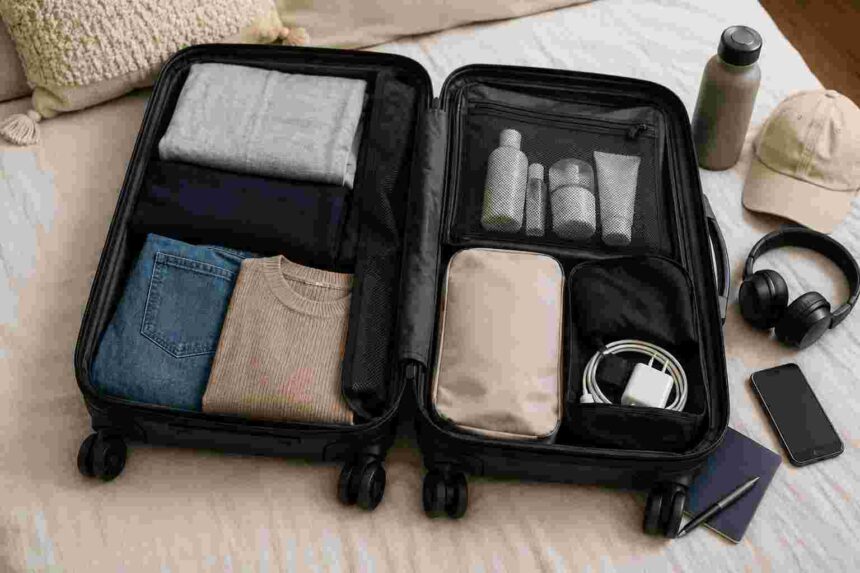
A carry-on packing list for a one week trip covers clothing, toiletries, electronics, travel documents, and gear — all fitting within standard airline carry-on size limits. Packing carry-on only means no checked baggage fees, no baggage claim wait, and no risk of lost luggage. Done right, seven days of travel fits into a single bag you carry onto the plane.
- What to Pack in a Carry-On for One Week (Complete Checklist)
- Travel Documents & Financial Items
- Clothing
- Toiletries & Personal Hygiene
- Travel Health & First Aid
- Electronics & Connectivity
- Travel Gear & Organization
- How to Choose the Right Carry-On Bag for a Week-Long Trip
- Backpack vs Rolling Suitcase vs Duffel
- Carry-On Size Rules & Airline Limits
- What to Look for in a Carry-On Bag
- How to Pack Clothes for One Week in a Carry-On
- The Mix-and-Match Clothing Strategy
- How Many Clothes to Pack for 7 Days
- Clothing for Cold Weather Destinations
- What to Wear on Travel Day
- Packing Techniques to Maximize Carry-On Space
- Travel Security & Safety Items for Carry-On Travel
- Carry-On Packing List for One Week: Photography & Tech Setup
- Seasonal & Destination-Specific Packing Adjustments
- Preparing Before You Leave
- Conclusion
- FAQs
- What should I pack in a carry-on for a one-week trip?
- How many outfits can you fit in a carry-on for 7 days?
- What is the best carry-on bag for a week-long trip?
- How do you pack a week’s worth of clothes in a carry-on?
- What liquids can I bring in a carry-on for a week?
- Do I need packing cubes for carry-on travel?
- Can you really pack for a week in just a carry-on?
- What should I put in my personal item vs carry-on bag?
What to Pack in a Carry-On for One Week (Complete Checklist)
Travel Documents & Financial Items
Keep these in the most accessible pocket of your bag — not buried inside.
- Passport, visa (if required), driver’s license or ID card
- Travel itinerary, hotel reservations, copies of tickets
- Travel insurance and health insurance card
- Credit cards, debit cards, cash in local currency, some USD as backup
- Emergency contact information (printed, not just digital)
Clothing
Pack 6–7 tops, 2 bottoms, 5 underwear, 5 pairs of socks, one lightweight jacket, and one pair of comfortable shoes. That’s enough for a full week with minimal sink-washing.
- Tops: T-shirts, tank tops, one button-up shirt, one sweater
- Bottoms: pants, shorts, skirts, or dresses depending on destination
- Outerwear: lightweight jacket or raincoat
- Undergarments: underwear, bras, socks, sleepwear
- Footwear: comfortable walking shoes, sandals — skip the dress shoes unless required
- Accessories: sunglasses, hat, belt, scarf (doubles as a blanket on flights)
- Swimwear: swimsuit and coverup if heading to a beach or pool
Toiletries & Personal Hygiene
All liquids must comply with the TSA liquids rule — 3.4 oz (100 ml) per container, in a quart-sized bag. Transfer everything into travel-sized containers before packing.
- Toothbrush, toothpaste, floss, deodorant
- Shampoo, conditioner, body wash, skincare products
- Shaving kit, tweezers, nail clippers
- Glasses or contact lenses if needed
Travel Health & First Aid
- Pain reliever, fever reducers, cold medicines
- Personal prescriptions (always in original packaging for international travel)
- Vitamins, throat lozenges, melatonin for jet lag, multivitamin
- Sunscreen, insect repellent, sunburn relief, antibacterial ointment, hand sanitizer
- Compact first aid kit
Electronics & Connectivity
- Smartphone and charger, laptop or E-reader and charger
- Portable power bank (keeps you charged between outlets)
- Camera or GoPro, memory card, charger
- Universal travel adapter and voltage converter for international outlets
- Noise-reducing headphones or earbuds
- Electronics organizer to avoid cable chaos
Travel Gear & Organization
- Compression packing cubes (one for clean, one for dirty clothes)
- TSA-approved luggage lock
- Travel pillow, eye mask, ear plugs for long flights
- Packable daypack (doubles as a personal item at the airport)
- Travel wallet or neck wallet for documents
- Collapsible water bottle
- Collapsible laundry bag
How to Choose the Right Carry-On Bag for a Week-Long Trip
Backpack vs Rolling Suitcase vs Duffel
The right bag depends on where you’re going and how you move.
| Bag Type | Best For | Trade-Off |
| Travel backpack | Varied terrain, public transit, hostels | Less organized, harder to access |
| Rolling luggage (4-wheel) | City trips, paved surfaces, business travel | Struggles on cobblestones, stairs |
| Duffel bag | Flexible packing, budget airlines | No structure, harder to organize |
| Convertible backpack/duffel | Mixed-terrain travel | Slightly heavier |
Carry-On Size Rules & Airline Limits
Most major airlines allow carry-on bags up to 22 x 14 x 9 inches, but budget airlines often apply stricter limits and may charge fees for overhead bin bags. Always check your specific airline’s size and weight policy before packing — weight limits range from 15 to 26 lbs depending on the carrier.
[INTERNAL LINK: carry-on size rules by airline]
What to Look for in a Carry-On Bag
Choose a bag that is lightweight, durable, and waterproof or water-resistant. A warranty matters more than most travelers realize — a broken wheel or snapped zipper mid-trip is a serious problem. Packable daypacks that compress into a small pouch are worth including as a secondary bag for day trips.
How to Pack Clothes for One Week in a Carry-On
The Mix-and-Match Clothing Strategy
Choose clothes in neutral tones that work together — navy, black, grey, olive. A single pair of travel pants can pair with four different tops, cutting the number of bottoms you need in half. Prioritize breathable materials and odor-resistant fabrics like Merino wool or polyester-spandex blends. Dark colors hide stains better than light ones during multi-day wear.
How Many Clothes to Pack for 7 Days
Six tops, two bottoms, five pairs of underwear, and five pairs of socks cover a full week with one planned sink-wash or laundromat stop. Add one athletic shorts and one button-up shirt for versatility across casual and semi-formal settings.
Clothing for Cold Weather Destinations
Cold-weather packing does not require heavy luggage. A packable down jacket (like the Arc’teryx Cerium LT), lightweight long underwear (Patagonia Capilene), a fleece beanie, extra-warm socks (Smartwool Extra Heavy), and waterproof gloves can all weigh under 1.5 lbs combined — and they compress small. Layer these over your base clothing instead of packing separately for each temperature scenario.
What to Wear on Travel Day
Wear your bulkiest items on travel day to free up bag space. A long-sleeve shirt, athletic pants with stretch fabric, and trail runners check all the boxes — comfortable for long transits, acceptable in most public spaces, and easy to layer. A 65% cotton / 35% polyester blend balances softness and breathability for hours in transit.
Packing Techniques to Maximize Carry-On Space
Rolling vs Folding Clothes
Rolling is more space-efficient than folding for most soft items — T-shirts, underwear, socks, athletic pants. Place heavier items (jeans, jackets) flat at the bottom and roll lighter items to fill gaps. This also reduces wrinkles in breathable fabrics.
Using Packing Cubes Efficiently
Compression packing cubes compress clothing volume by 30–50% without wrinkling. Assign one cube per clothing category: tops, bottoms, undergarments. Use a separate small cube for dirty clothes so you never mix clean and used items mid-trip. Eagle Creek’s Pack-It system is a reliable option with cubes in multiple sizes.
Minimizing Toiletries & Shoes
Bring only two pairs of shoes maximum — one walking shoe and one sandal. Wear the bulkier pair on travel day. For toiletries, buy travel-sized versions or use reusable silicone bottles. A multi-use soap like Dr. Bronner’s covers body wash, shampoo, and hand soap in one bottle — fewer containers, more space.
Travel Security & Safety Items for Carry-On Travel
Pickpocketing and document loss are the most common travel security problems. A neck wallet, RFID-blocking money belt, or undercover bra pouch keeps your passport and credit cards off your outer clothing. A TSA-approved luggage lock secures your bag in hostels or shared spaces. Reflective clothing or a small headlamp adds a practical safety layer at night. For hotels, a portable door lock costs very little and significantly improves room security. Travel insurance covers emergencies that no amount of physical security gear can address — medical issues, cancellations, lost bags.
Carry-On Packing List for One Week: Photography & Tech Setup
[INTERNAL LINK: best mirrorless cameras for travel]
Compact mirrorless cameras offer near-DSLR image quality at a fraction of the size and weight. The Olympus O-MD E-M10 fits in a small camera bag alongside two lenses. Keep an Ultrapod II travel tripod — it weighs almost nothing and handles most shooting scenarios. Bring two fully charged spare batteries (Powerextra makes affordable alternatives to OEM batteries).
For remote workers and travel bloggers, a MacBook Pro 14, Roost laptop stand, Apple Magic Keyboard, and Keychron M3 mouse make a complete portable workstation. A WD My Passport 4TB external hard drive provides an offline backup. A worldwide travel adapter with multiple USB ports handles charging across all devices simultaneously.
Seasonal & Destination-Specific Packing Adjustments
Always check the weather forecast for your exact travel dates — not just the general season. Rainy destinations need waterproof outer layers and water-resistant shoes. Cold regions need thermal underwear and a packable down jacket. Beach trips swap one pair of pants for swimwear and a coverup. Unpredictable destinations (mountains, shoulder season cities) need at least two light layers that can combine for warmth rather than one heavy item.
[INTERNAL LINK: packing list by destination type]
Preparing Before You Leave
- Lock all windows and doors
- Unplug electronics and appliances to prevent electrical fires
- Arrange mail collection so your home doesn’t look unoccupied
- Store jewelry, cash, and important documents in a lockbox
- Use smart light bulbs on timers for basic home security
- Leave a spare key and emergency contact information with a trusted neighbor
Conclusion
A well-organized carry-on packing list for a one week trip removes the stress from both the preparation and the journey itself. The goal is a single bag that covers every scenario — cold mornings, hot afternoons, business meetings, beach days — without checking anything. Pack with intention, choose versatile items, and travel lighter than you think you need to.
FAQs
What should I pack in a carry-on for a one-week trip?
Pack clothing for 7 days using a mix-and-match strategy, travel-sized toiletries in TSA-compliant containers, essential electronics with chargers, all travel documents, and a small first aid kit. Packing cubes and a packable daypack help organize the space efficiently.
How many outfits can you fit in a carry-on for 7 days?
You can fit 6–7 tops, 2 bottoms, 5 underwear, and 5 socks for a full week. With compression packing cubes and a mix-and-match capsule wardrobe, most travelers fit 7-day clothing into less than half their available bag space.
What is the best carry-on bag for a week-long trip?
The best choice depends on your travel style. A travel backpack suits mixed-terrain and transit-heavy trips. A 4-wheel rolling suitcase works best for city travel on paved surfaces. A convertible duffel/backpack offers the most flexibility across different travel scenarios.
How do you pack a week’s worth of clothes in a carry-on?
Roll clothes instead of folding, use compression packing cubes, wear your bulkiest items on travel day, and select wrinkle-resistant, breathable fabrics. Limit yourself to two pairs of shoes and plan one laundry stop mid-trip if needed.
What liquids can I bring in a carry-on for a week?
TSA rules allow liquids in containers of 3.4 oz (100 ml) or less, all fitting in one quart-sized clear bag. Transfer toiletries to reusable silicone travel bottles before packing. Consider buying bulky liquids like shampoo at your destination to save space.
Do I need packing cubes for carry-on travel?
Packing cubes are not required but they significantly improve organization and compress clothing volume. Compression cubes are especially useful for a one-week trip — they separate clean from dirty clothes and make it faster to find items without unpacking everything.
Can you really pack for a week in just a carry-on?
Yes. Six tops, two bottoms, and five sets of underwear and socks cover a full week. A planned sink-wash or one laundromat visit removes the need for extra clothing entirely. Choosing breathable, odor-resistant fabrics like Merino wool extends wear between washes.
What should I put in my personal item vs carry-on bag?
Keep your personal item (daypack, crossbody bag, or waist pack) stocked with items you need during the flight — laptop, E-reader, travel documents, eye mask, travel pillow, headphones, snacks, and chargers. Your carry-on holds everything else: clothing, toiletries, shoes, and packed gear.