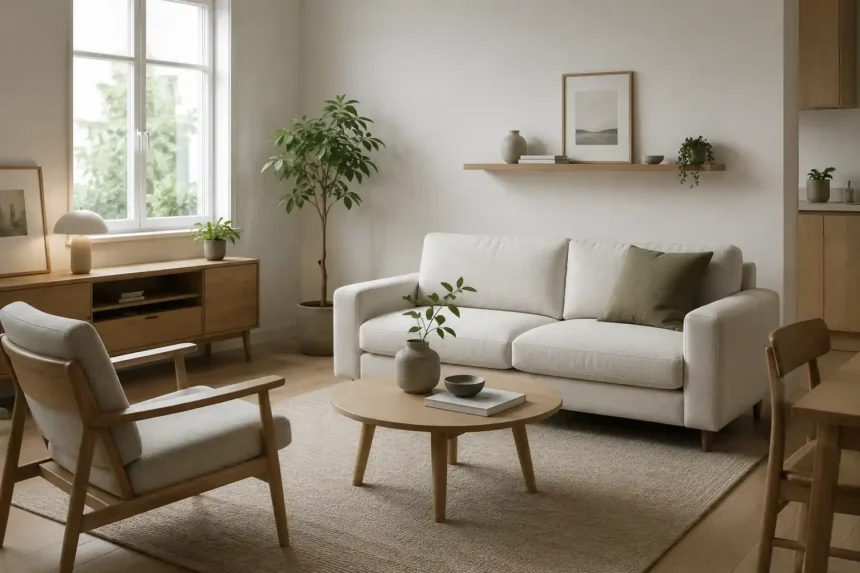
Homecz refers to a modern home living approach that blends smart automation, minimalist design, and energy-conscious habits into one connected system. It covers everything from app-controlled lighting to the materials used on a shelf. The term shows up across appliances, interior design, and even real estate listings, but the core idea stays the same: a home that runs quietly and adapts to the people in it. What catches most newcomers off guard is how much of homecz has nothing to do with gadgets at all — a chunk of it is just smarter room layout and material choices.
- What Is Homecz? Meaning, Origins, and Rising Popularity
- Core Principles and Architecture of Homecz
- How Homecz Works in Practice
- Homecz Smart Home Automation and Devices
- Homecz Appliances: Washing Machines, Dryers, and Combined Units
- Homecz in Interior Design
- Homecz and Zen-Inspired Living
- Homecz Across Living Scenarios
- Energy Efficiency and Sustainability in Homecz
- Security and Safety in Homecz Systems
- Homecz vs Traditional Smart Home Systems
- Professional Organizing and Family Support Services Linked to Homecz
- Real Estate, Construction, and Commercial Variations of Homecz
- Common Mistakes to Avoid With Homecz Setups
- Benefits of Homecz
- The Future of Homecz
- Conclusion
- FAQs
What Is Homecz? Meaning, Origins, and Rising Popularity
Homecz describes a lifestyle built around connected living, calm design, and practical automation rather than flashy tech for its own sake. It grew out of a mix of minimalist interior trends and residential automation, gaining traction as hybrid work and rising energy concerns pushed people to rethink how their homes function day to day.
Renters, homeowners, and remote workers have all adopted pieces of it because it scales. A studio apartment and a family house can both apply the same principles at different intensities.
The appeal isn’t really the smart devices. What most guides skip is that homecz spread because it solved a boring problem well: too many disconnected gadgets and too little actual comfort.
The next question worth asking is what actually holds this system together structurally.
Core Principles and Architecture of Homecz
Homecz is built on purposeful simplicity: fewer, better-integrated systems instead of a pile of standalone gadgets. Quiet technology and human comfort guide every design decision.
| Layer | Function |
| Device Layer | Physical hardware — sensors, locks, lighting |
| Connectivity Layer | Wi-Fi, Bluetooth, or hub-based communication between devices |
| Intelligence Layer | Pattern recognition and rule-based responses |
| Orchestration Layer | Coordinates multiple devices toward one outcome (e.g., “leaving home” mode) |
| Experience Layer | What the resident actually sees and controls |
Skipping any layer usually creates the frustration people associate with “smart homes that aren’t actually smart” — devices that work individually but never talk to each other. [INTERNAL LINK: smart home ecosystem guide]
That structure explains the theory, but daily use looks a lot more ordinary than a five-layer diagram suggests.
How Homecz Works in Practice
In practice, homecz means a thermostat that adjusts before you notice you’re cold, and a motion sensor that turns off a light nobody’s using. Sensors and IoT hardware collect real-time data; pattern recognition turns that into small, repeated adjustments.
None of this requires a dramatic setup. Most homes add one or two devices, watch how they behave for a few weeks, then expand from there — the gradual approach tends to avoid the over-automation mistake covered later in this guide.
That gradual expansion almost always starts with the devices themselves.
Homecz Smart Home Automation and Devices
Smart lighting, door locks, cameras, and voice assistants form the practical backbone of most homecz setups. Products built around GSM modules and mobile apps let residents control these remotely, often through a single connected app rather than five separate ones.
Common Smart Devices Used in Homecz
- Smart bulbs and smart plugs
- Video doorbells and Wi-Fi cameras
- Automated irrigation systems
- Air quality monitors
- Integrated security systems with app-controlled appliances
The exact threshold that separates a helpful setup from a cluttered one is usually device count, not device quality — five well-chosen tools beat fifteen redundant ones.
Devices are only half the picture. The appliances they connect to matter just as much.
Homecz Appliances: Washing Machines, Dryers, and Combined Units
Zen Home CZ appliances are the most recognized product line under the homecz name, built around plastic-body construction, rust prevention, and simplified wash programs.
| Model | Type | Capacity | Best For |
| CZ-800 | Washing machine | 8.0 kg | Medium to large families |
| CZ-700 | Washing machine | 7.0 kg | Small homes, apartments |
| CZ-300-10 | Dryer | Standard | Outdoor-limited laundry routines |
| CZ-1100 | Combined washer-dryer | Compact | All-in-one, limited space |
Note: appliance specs and model availability should be re-checked periodically, since capacity and pricing on these lines change with newer releases.
Appliances handle the function. What ties the whole home together visually is the interior design layer.
Homecz in Interior Design
Clean lines, open space, and natural textures define the look most people associate with homecz interiors. Hidden cables and warm lighting reduce visual clutter without removing the technology itself — the tech disappears into the design instead of sitting on top of it.
Materials Commonly Linked With Homecz
Wood, bamboo, stone, cotton, linen, ceramic, and matte metal finishes appear most often, chosen for texture and durability rather than trend.
Design choices like these connect directly to a specific philosophy behind homecz — one borrowed heavily from Zen principles.
Homecz and Zen-Inspired Living
Zen-inspired design favors calm order over visual noise. Breathing space between furniture pieces, mindful use of light, and a dedicated meditation or quiet corner are common markers.
This isn’t decoration for its own sake. Fewer visible objects genuinely reduce the mental load of a cluttered room, which is the outcome most residents actually notice first.
Philosophy aside, homecz has to work across very different living situations, and each one needs a slightly different approach.
Homecz Across Living Scenarios
Small apartments lean on foldable desks, wall-mounted shelves, and compact lighting to make limited square footage feel workable.
Family homes add child-safe locks, scheduled routines, and dedicated storage zones for toys and school items — small changes that cut down on daily friction.
Remote workers benefit most from a defined work corner, cable management, and scheduled lighting that signals when the workday starts and ends.
Commercial spaces — hotels, serviced apartments, and rental units — apply the same logic at scale, using smart entry and energy-efficient lighting to reduce operating costs.
Every one of these scenarios eventually runs into the same practical concern: energy use.
Energy Efficiency and Sustainability in Homecz
Automated schedules and energy monitors cut electricity waste by adjusting usage to when a space is actually occupied. Insulation and durable materials do quieter, longer-term work than any smart device.
The saving isn’t dramatic on any single device, but it adds up across a full household over a year — which is the part most casual guides gloss over.
Efficient energy use naturally raises a related concern: how secure all this connected hardware actually is.
Security and Safety in Homecz Systems
Layered encryption and on-device processing keep sensitive data off open networks where possible. Smart locks, CCTV cameras, and water leak sensors handle both intrusion and accident-related risks.
The one setting that changes results most: keeping device firmware updated. Outdated firmware is the most common entry point for security gaps in home automation, more than weak passwords alone.
With security covered, it’s worth comparing homecz directly against the smart home systems most people already know.
Homecz vs Traditional Smart Home Systems
| Factor | Homecz | Traditional Smart Home |
| Control Model | Predictive, adaptive | Command-driven |
| Device Integration | Cross-platform by design | Often single-ecosystem |
| Learning Capability | Adaptive behavioral learning | Manual rule-setting |
| Scalability | Built for gradual expansion | Often requires full rebuild |
The main difference isn’t the hardware — it’s whether the system adjusts to you or waits for instructions every time.
Beyond hardware and comparisons, homecz also stretches into services most people don’t expect.
Professional Organizing and Family Support Services Linked to Homecz
Some services under the homecz name focus on decluttering and home staging rather than automation. Separately, family support programs offering trained volunteers and community resources also use the homecz name in some regions.
Worth noting: not every “homecz” result online refers to the same thing. A few unrelated businesses share the name, including local internet and service providers, so it’s worth confirming which homecz a resource is actually describing before applying advice from it.
That naming overlap shows up again in real estate and commercial contexts.
Real Estate, Construction, and Commercial Variations of Homecz
Residential developments marketed under homecz principles emphasize modern layouts and efficient design choices — smaller footprints that still feel functional. Offices, showrooms, and rental properties apply the same layout planning for lower operating costs and easier upkeep.
These larger applications work well, but only when the basics are set up correctly from the start.
Common Mistakes to Avoid With Homecz Setups
- Adding too many devices at once instead of testing a few first
- Ignoring design balance in favor of tech alone
- Skipping regular maintenance and firmware updates
- Reusing weak passwords across connected devices
- Connecting devices to unsecured networks
Avoiding these five issues prevents most of the frustration people report with smart-home setups generally, not just homecz specifically.
Benefits of Homecz
Convenience, long-term value, and lower energy costs are the most consistently reported benefits. Renters and buyers both cite ease of use as a reason for adopting even one or two homecz principles.
The future direction of homecz builds directly on these existing benefits.
The Future of Homecz
Ambient computing, wearable technology, and AI-driven environments are expected to shape the next stage of homecz adoption. Systems that respond to mood, schedule, and even weather conditions are already in early development across the smart-home industry.
Trend-related claims in this section should be reviewed periodically, since AI and IoT capabilities shift faster than most other home technology categories.
Conclusion
Homecz brings together smart automation, minimalist design, and energy awareness into a single, adaptable approach to home living. It works whether the goal is a smaller apartment upgrade or a full smart-home rebuild, because the underlying principles scale up or down without losing their point: a home that requires less thinking to run well.
FAQs
What is homecz mainly known for?
It’s mainly known for combining smart home automation with minimalist, Zen-inspired interior design rather than focusing on gadgets alone.
Are homecz appliances energy efficient?
Yes, models like the CZ-800 and CZ-700 are built with energy efficiency as a core feature, though exact savings depend on usage patterns.
What products are included in homecz?
The category spans washing machines, dryers, combined laundry units, smart lighting, security devices, and certain interior design materials.
Is homecz only about appliances?
No. Appliances are one piece; the term also covers automation, interior design, energy habits, and in some cases organizing or real estate services.
Why is homecz becoming popular?
Rising energy costs and more people working from home have pushed demand for living spaces that are calmer and more efficient to run.
How does homecz differ from traditional smart home systems? Homecz systems are built to adapt and predict usage patterns, while traditional smart home setups usually rely on manual commands and single-brand ecosystems.
What materials are commonly used in homecz design? Wood, bamboo, stone, linen, and matte metal finishes are the most common choices, selected for texture and durability.
Is homecz suitable for small apartments or only large homes? It works for both. Small apartments typically start with compact lighting and foldable furniture, while larger homes add more automation layers over time.