
New York Travel Guide is your complete guide to exploring NYC like a local. A useful New York trip starts less with a checklist and more with how the city moves: I usually treat Manhattan as a working map, then build each day around city geography, walking, and the subway so I am not crossing between the Hudson River and East River all afternoon. For first-time visitors, the smartest rhythm is to choose a central base, keep trip length realistic, and let one anchor experience shape the day, maybe Central Park in the morning, Rockefeller Center near sunset, or the Brooklyn Bridge when the light catches the Manhattan skyline. The pieces that make New York feel manageable are often unglamorous: checking entry requirements before booking flights, comparing NYC accommodation by neighborhood choice, leaving room for free activities, and planning meals around areas like Chelsea Market, SoHo, or Lower East Side instead of chasing reservations across town. I have learned that the best travel planning here comes from resisting the urge to do not see everything; use official guide resources, pick major attractions carefully, keep tipping etiquette and NYC expenses in mind, and save space for the small stuff, a quiet bench, a late slice of pizza, a quick look at Fifth Avenue, or a detour into Brooklyn when Times Square starts to feel like too much.
- Where to Stay in New York
- Travel Guides, Planning Tools, and Passes
- Top Attractions and Must-Do Experiences
- Bridges, Walks, and Skyline Views
- Museums, Memorials, and Culture
- Central Park and Seasonal Activities
- Neighborhoods Beyond Times Square
- Broadway, Off-Broadway, and Nightlife
- Food, Brunch, and Restaurants
- Shopping in New York
- Money, Tipping, and Budget Tips
- Getting There and Entry Requirements
- Do Not Overbook Your Trip
Where to Stay in New York

On a first NYC trip, I usually tell people to choose a base by rhythm, not fame: Brooklyn or Manhattan depends on how late you’ll be out, how often you’ll lean on NYC transit, and whether taxi rides feel like convenience or waste. For first-time visitors, the practical move is often to look besides Times Square, because that center can be crowded and expensive; I’d rather sleep near Chelsea, the Meatpacking District, or the West Village when the budget works, since the High Line, lower west Manhattan, SoHo lunch spot choices, Manhattan shopping, brunch, and rooftop bars sit naturally in the same day. For calmer NYC neighborhoods, pick somewhere less busy with a real neighborhood feel, or try the Brooklyn side near fast local trains and express trains. The trick is making an area-based itinerary before booking: planning days by area helps you avoid backtracking, and good hotels near restaurants or late-night food stalls make where to stay in New York feel like part of the trip rather than a nightly reset.
Travel Guides, Planning Tools, and Passes
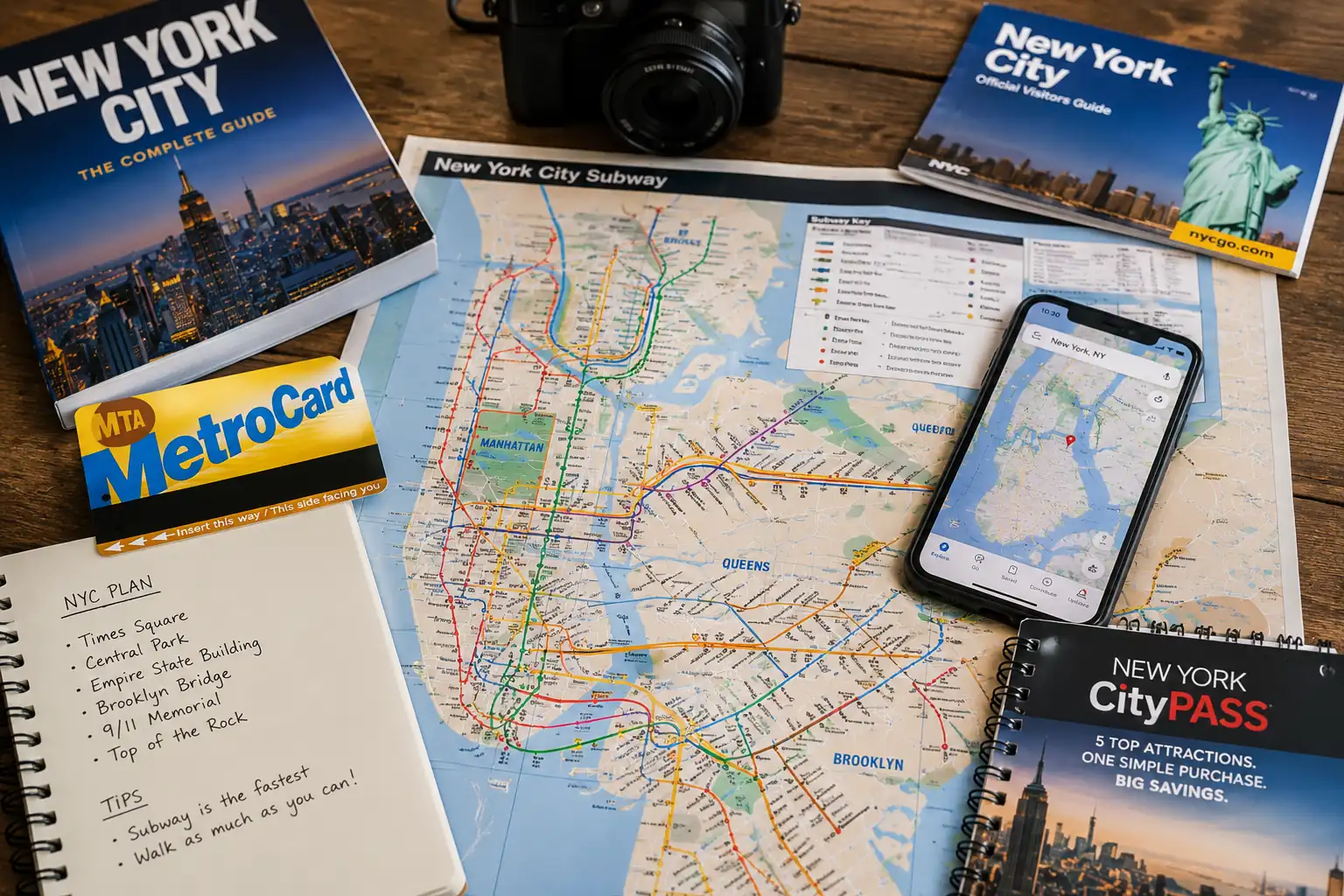
Before I sketch a route, I’ve learned to treat I LOVE NY and NYC Tourism + Conventions as the backbone, then layer I LOVE NY official travel guide resources I LOVE NY Travel Guide, I LOVE NY Travel Highlights, NYC Official Guide, Travel Planner, NYS Map, official digital travel guides, brochures, newsletters, and newsletter signup so a New York Travel Guide becomes practical rather than just a saved folder of ideas. From there, I match the trip type to the right official guide options and travel resources: Kids Guide & Activity Book for kids’ activities, LGBTQ Travel Guide for LGBTQ travel, Black Travel Guide for Black heritage, Winter Guide to New York State and Winter Travel Guide for winter travel, plus Path Through History Guide and history-focused guides when history is the thread across New York State, beaches, and outdoor adventures. On the planning-and-passes side, I check official sources for visa, travel authorization, ESTA, United States, entry rules, travel documents, current checks, international travel, flight routes, prices, Gatwick, and Norwegian Air, treating those cross-checks as unique travel data and prioritizing official resources before blogs; then I handle the ground layer with MetroCards kept topped up for getting around through flexible transport options, research area choices, schedule must-do experiences with advance booking, make restaurant bookings and meal budgets, and keep a passport handy, because those boring details are what turn a travel destination into a trip that feels calm, current, and navigable instead of over-managed.
Top Attractions and Must-Do Experiences
My field-tested way to handle New York’s top attractions is to treat the city as a chain of lived experiences, not a checklist: I use the I LOVE NY Travel Guide, Travel Highlights, Kids Guide & Activity Book, Path Through History Guide, LGBTQ Travel Guide, Black Travel Guide, Winter Guide, NYC Official Guide, and digital travel guides as practical guide options, then move through New York City as an island, long and narrow, where a taxi or those yellow cabs with glowing roof lights can save a route when walking stops making sense. The vibrant atmosphere is what makes it a dream destination for shoppers and artists: I’d begin with NYC museums, using my museum recommendations to balance the Metropolitan Museum of Art for range, the Museum of Modern Art and MoMA for modern art, the Whitney Museum of American Art for American art, the Guggenheim Museum for architecture, and the 9/11 Memorial for memorials, culture, and New York culture that need quiet time. Then shift into the city oasis of Central Park, where streams, entertainers, buskers, autumn leaves, the winter ice rink, The Boathouse as an iconic lunch spot with reservations, ice skating, long lines, winter, summer, relaxing corners, seasonal activities, and the overall park experience all change the city’s tempo. After that, wander elsewhere from Times Square into Little Italy, pop-up-style restaurants, independent shops, and small souvenirs, before choosing theater shows, Off-Broadway, a Harry Potter parody, Drunk Shakespeare, or NYC nightlife with drinks, partying, different nightlife vibes, cocktails, views, a rooftop bar, and rooftop views at The Top of The Standard, The Roof at Public Hotel, Mr Purple, or Hotel Indigo; the less expensive move is admitting expensive nightlife is optional, while the legal drinking age in the USA is 21. I also treat food as sightseeing: NYC brunch on weekends at Bluestone Lane Upper East Side Café or Sarabeth’s, an American diner reset at Red Flame Diner, Thai food at Pure Thai Cookhouse, dim sum at Dim Sum Palace, Italian lunch at Serafina Fabulous Pizza, Middle Eastern food and Eastern Mediterranean food at Shuka, pan-Asian dinner at Tao Downtown, small plates at Vandal, La Esquina for a speakeasy-style Mexican restaurant, sushi happy hour, upmarket restaurants, casual restaurants, affordable food, and smart lunch spots, with pop-up restaurants and souvenir shopping left for slower wandering. For retail, Times Square shops and pricey shops are context, Macy’s is the classic shopping stop, and a shopping neighborhood, luxury shopping street, strong shopping, preferred shopping experience, New York shopping, retail areas, and a loose shopping guide should match your actual pace. The odd little magic still matters too: Carrie Bradshaw’s Apartment at 66 Perry Street remains a famous stoop, Sex and the City marker, and pop-culture stop, especially if your mental postcard comes from New Year’s Eve, New Year’s Eve 2018, winter NYC, cold weather, Christmas lights, a winter atmosphere, magical atmosphere, and magical seasonal atmosphere just keep restaurant tips around 15% to 22% and remember hotel staff when budgeting.
Bridges, Walks, and Skyline Views
For a skyline-focused day in New York, I’d start on foot rather than rushing straight to observation decks, because the best perspective often builds slowly between bridges, river paths, and dense clusters of buildings before opening into the NYC skyline; from a bridge walk, you can frame the Empire State Building one moment and catch the Statue of Liberty in the distance the next, then shift uptown for Top of the Rock, where the 360-degree views feel especially useful because you are looking at the city with the Empire State Building inside the composition rather than standing on it. If this is your first serious NYC stop, pair the beauty with context by walking Lower Manhattan near the 9/11 Memorial and 9/11 Museum—it is a powerful visit and often an emotional visit, so I usually avoid stacking it too tightly with lighter sightseeing. For travelers who want a sharper visual payoff, a helicopter tour can turn the route into a premium skyline experience, but I’d still keep one slow walk in the plan, because New York’s skyline makes more sense when you’ve felt its scale from the street first.
Museums, Memorials, and Culture
For museums, memorials, and culture in New York, I’d plan the day by mood rather than geography: start with a focused museum visit, leave room for a quieter memorial stop, then let the city’s neighborhood texture carry the rest of the experience. The best cultural days here are rarely about checking off every major institution; they come from noticing how a gallery, a public monument, a historic street, and even a carefully chosen lobby near The Chambers Hotel can frame the city’s layered personality. I usually suggest pairing big-name museums with smaller cultural spaces, because New York’s depth is in the contrast: polished collections, immigrant history, civic memory, experimental art, and everyday street life all sitting within a few subway stops of each other.
Central Park and Seasonal Activities
Central Park is easiest to understand as New York’s reset button rather than just another attraction: in spring, I’d plan slow routes around blooming paths and quieter lawns before the crowds build; in summer, early mornings work best for shaded walks, rowboats, picnics, and open-air performances; in fall, the park becomes one of the city’s best low-cost seasonal experiences, especially around the wooded paths, bridges, and leaf-heavy edges; and in winter, the rhythm changes again with skating, crisp reservoir walks, and museum-adjacent pauses that make the cold feel intentional rather than inconvenient. The trick is not to treat Central Park as one stop on a checklist, but as a flexible part of the day, something you enter between neighborhoods, meals, museums, or evening plans because its seasonal value comes from timing, pace, and knowing when to step away from the busiest routes.
Neighborhoods Beyond Times Square
Times Square is useful for orientation, but the city starts feeling more human once you step into neighborhoods where daily routines shape the travel experience: Brooklyn has that lived-in rhythm I always recommend first-timers sample early, especially around brownstone blocks, waterfront walks, and low-key cafés near Sheraton Brooklyn; Midtown alternatives like The Royalton and The Tuscany by St Giles can still keep you central without making your whole trip feel trapped in neon. I’d treat each area like its own mini-itinerary rather than chasing every landmark: spend a morning in the West Village for quiet streets and independent shops, drift into the Lower East Side for food and old-new cultural layers, then save Harlem, Astoria, or Williamsburg for the kind of neighborhood wandering that rarely fits neatly into FAQ-style sections or a separate FAQ heading. The best approach is not to rely only on three pages of source pages or extracted data, because even helpful FAQ content from travel blogs like Inspiring Explorers or The Travelista can leave missing FAQs around timing, atmosphere, and how a place actually feels on foot; that is where slow pacing beats overplanning.
Broadway, Off-Broadway, and Nightlife
I usually treat New York’s theater and nightlife as a late-day strategy rather than a single checklist item: start by deciding whether you want the polished spectacle of Broadway, the sharper intimacy of Off-Broadway, or a night built around jazz rooms, comedy cellars, rooftop bars, and neighborhood lounges that feel more local than staged. For Broadway, booking ahead helps for major productions, but I’ve had good luck checking same-day ticket options when I’m flexible about seats and showtimes; Off-Broadway is where the city often feels more experimental, with smaller venues giving you stronger proximity to the actors and less of the tourist rush. After the curtain call, don’t default straight back to the hotel Hell’s Kitchen, the West Village, the Lower East Side, and Brooklyn each offer a different kind of night, from casual post-show dinners to speakeasy-style bars and live music spots where the real performance starts after midnight.
Food, Brunch, and Restaurants
Food in New York works best when you treat meals as part of the route, not just breaks between sights: grab a quick bagel or deli breakfast before a museum morning, save brunch for a neighborhood where you actually want to linger, and choose dinner based on the energy you want afterward, whether that means a tucked-away ramen counter, a classic steakhouse, a slice shop near Broadway, or a late reservation after Central Park time. From experience, the strongest restaurant days here usually come from mixing one planned meal with one flexible discovery, because the city rewards curiosity more than rigid checklists; I’d rather leave space for a bakery line in the West Village, a Chinatown dumpling stop, or a casual Brooklyn table than overcommit to back-to-back “must-book” places that turn eating into logistics.
Shopping in New York
Shopping in New York works best when you treat it less like a checklist and more like a neighborhood-by-neighborhood edit: start with independent boutiques in SoHo or the Lower East Side for pieces you won’t see everywhere, move uptown for polished department-store browsing, and leave room for specialty stops like bookstores, vintage racks, design shops, and food markets where the city’s personality shows up in smaller details. I usually suggest building shopping around where you already plan to be, because the best finds often happen between meals, walks, or gallery stops rather than during a separate “shopping day”; this keeps the experience practical, avoids tourist fatigue, and gives you a better feel for how New Yorkers actually browse, compare, and buy.
Money, Tipping, and Budget Tips
In New York, the smartest budget move is to treat each day like a flexible spend map rather than a fixed checklist: keep cash for small vendors, cards for transit and reservations, and a quiet buffer for spontaneous Food, Brunch, and Restaurants stops, last-minute Broadway, Off-Broadway, and Nightlife plans, or a detour into Neighborhoods Beyond Times Square where prices can shift block by block. From experience, tipping is where many visitors underestimate costs: restaurants usually expect around 18–22%, bartenders often get $1–$2 per drink, hotel staff and guides appreciate small cash tips, and taxis or rideshares commonly land around 15–20%. To keep the trip comfortable without draining your wallet, mix paid icons with free-value days: pair Central Park and Seasonal Activities with Museums, Memorials, and Culture, use Bridges, Walks, and Skyline Views as your built-in sightseeing plan, compare Travel Guides, Planning Tools, and Passes before buying bundled tickets, and think practically about Getting Around New York and Where to Stay in New York, because subway access can save more money than a cheaper room far from your route.
Getting There and Entry Requirements
Arriving in New York is usually less about one “best” route and more about matching your entry point to your first few hours on the ground: JFK works well for Queens, Brooklyn, and many international flights; Newark can be smoother for lower Manhattan or New Jersey-based stays; and LaGuardia is often the quickest domestic option if your plans begin in Midtown or the Upper East Side. For international visitors, I always recommend checking passport validity, visa or ESTA eligibility, airline document rules, and customs requirements before booking the final leg, because New York itself is easy to navigate once you land, but entry paperwork can turn a simple trip into a stressful start if it is handled late. From experience, the smartest move is to plan your airport transfer around arrival time rather than distance alone: late-night arrivals often justify a taxi or rideshare, while daytime travelers with lighter bags can save money using trains, buses, or subway connections.
Do Not Overbook Your Trip
The easiest mistake to make in New York is treating the city like a checklist instead of a place with its own pace; I’ve found that the best days usually have one firm plan, one flexible idea, and enough open space for delays, detours, long walks, subway reroutes, or the unexpected café, gallery, bookstore, park bench, or street performance that ends up being more memorable than the thing you rushed toward. Build your day around neighborhoods rather than scattered landmarks, leave breathing room between reservations, and avoid stacking early mornings after late nights because New York rewards attention more than exhaustion. A lighter schedule also makes practical sense: transit takes longer than maps suggest, meals stretch, museums deserve time, and the city’s energy can wear you down faster than expected, so planning less often helps you experience more.